
Ancient Astronauts and the Urantia Book: A Better Origin Story
If you've watched Ancient Aliens or read Zecharia Sitchin, you already sense that mainstream archaeology is missing something about human origins. You're right. But the alien theory gets the answer wrong in a way that actually diminishes the real story. Here's what's actually more interesting.

The Intuition Is Correct
The ancient aliens hypothesis, popularized by Erich von Däniken, Zecharia Sitchin, and the History Channel, starts from a legitimate observation: there are things in the ancient archaeological record that don't fit neatly into the standard evolutionary narrative of human civilization.
Göbekli Tepe, built approximately 11,600 years ago by supposedly hunter-gatherer populations, features precision-carved T-shaped pillars weighing up to 20 tons, decorated with sophisticated relief carvings of animals, abstract symbols, and human figures, at least 6,000 years before the earliest known cities.
The Sumerian civilization appears in the archaeological record around 4500 BCE with writing, mathematics, astronomy, irrigation engineering, urban planning, and complex bureaucratic administration, with no clear developmental precursor culture.
The Tarim Basin mummies of western China, dating to approximately 1800 BCE, are Caucasian in feature, tall, red-haired, and dressed in woven tartan, thousands of miles from any known Caucasian population center, with no archaeological explanation for how they got there.
The intuition that mainstream archaeology is missing something is correct.
The conclusion that extraterrestrial aliens must have intervened is where the theory goes wrong.
What Ancient Aliens Gets Wrong
The ancient aliens hypothesis has three fundamental problems that its proponents rarely address:
Problem 1: It diminishes humanity. The core argument of ancient aliens is that human beings could not have built what they built without outside help. This is both empirically wrong and philosophically ugly. It assumes that ancient humans, who were biologically identical to modern humans, were too stupid to engineer solutions to engineering problems. The Pyramids, the Nazca Lines, Stonehenge, Baalbek: all of these have been demonstrated to be achievable with the materials and techniques available at the time. The mystery is not "how" but "why" and "who organized it."
Problem 2: It bypasses free will. If aliens flew down in spacecraft and gave humanity technology, that is a top-down imposition that treats humans as passive recipients of gifts they didn't earn and couldn't understand. The Urantia Book specifically describes a universe designed to protect free will, a universe where even God refuses to override mortal choice. The idea that visiting aliens casually handed out technology violates the fundamental structure of the cosmos as the UB describes it.
Problem 3: It misreads the Sumerian sources. Zecharia Sitchin's interpretation of the Sumerian texts, particularly his translation of "Anunnaki" as "those who from heaven to earth came," is not supported by mainstream Assyriology. The academic translation of Anunnaki is "princely offspring" or "offspring of the prince" (Sumerian: a-nun-na-ki). This is not a fringe dispute; it is the consensus of every credentialed Sumerologist working today.
What the Urantia Book Actually Describes
Here is where it gets interesting. The Urantia Book describes a history of Earth that explains the same anomalies the ancient aliens crowd is pointing at, but without requiring extraterrestrial spacecraft, without diminishing human agency, and without misreading the ancient sources.
The Planetary Prince's Staff
Approximately 500,000 years ago, a group of 100 beings, ascending citizens from the system capital Jerusem, materialized in physical human-compatible bodies on the Persian Gulf coast and established the world's first planned city, Dalamatia (66:2.3, 66:2.4).
These beings were not aliens from another planet. They were experienced universe citizens, personalities who had already completed their mortal careers on other worlds and had advanced through the mansion worlds and beyond. They materialized in specially prepared bodies that allowed them to function as physical beings on Earth, sustained by the fruit of the tree of life (66:4.13).
They came to teach, not to dominate. Their mission was to advance civilization through education: agriculture, animal husbandry, metallurgy, language, social organization, art, and worship of the one God (66:5.1, 66:5.29).
Now re-read the Sumerian word for these beings: Anunnaki, "princely offspring," literally "offspring/staff of the prince." The Planetary Prince was Caligastia. His staff were the Anunnaki.
This is not a forced interpretation. It is the most natural reading of the Sumerian etymology, applied to the UB's historical account, without any manipulation of either source.
The "Igigi": The Modified Human Assistants
The Sumerian texts describe a secondary class of beings below the Anunnaki called the Igigi, lesser beings who served the greater ones and sometimes rebelled against them.
The Urantia Book describes the modified Andonites, human beings who were genetically selected and trained to serve as the working staff alongside the materialized hundred. One hundred of these modified Andonites were associated with the Prince's staff, serving as helpers and maintaining the practical infrastructure of Dalamatia (66:4.14, 66:4.15, 66:4.16).
The parallel is precise and requires no alien spacecraft to explain.
Göbekli Tepe and the Post-Rebellion World
Göbekli Tepe's dating, approximately 11,600 years ago (~9,600 BCE), places it squarely in the Andite civilization period described by the Urantia Book. By this time, the descendants of Adam and Eve had been mixing with the Nodites (descendants of the rebel staff) and surrounding evolutionary races for over 25,000 years, producing the Andite civilization, the most technically advanced population the planet had seen.
The Andites built things. They engineered. They organized. They had access to metallurgical and construction techniques that traced back through the Nodite tradition to the original teachings of the Planetary Prince's staff. Göbekli Tepe is not evidence of alien intervention. It is evidence of Andite civilization, a population the mainstream archaeological record simply doesn't have a category for (78:5.1).
The Sumerian Explosion
The sudden appearance of Sumerian civilization (writing, mathematics, astronomy, urban planning) is not mysterious if you understand the Andite migrations. The Urantia Book describes wave after wave of Andite populations moving outward from the Mesopotamian homeland over a period of approximately 25,000 years, carrying their accumulated knowledge with them (78:6.1).
Sumer was not the beginning of civilization. It was a late expression of a much older tradition, the point at which Andite-descended populations had concentrated enough technical and organizational knowledge in one place to produce what we now call "the cradle of civilization."
The Sumerians didn't need aliens to teach them irrigation. They had inherited irrigation techniques from a tradition that traced back through the Nodites to the original agricultural schools of Dalamatia, representing 450,000 years of accumulated practical knowledge.
The Key Difference
Ancient aliens says: humans were too primitive to build what they built, so aliens must have helped.
The Urantia Book says: humans had access to a much longer and more sophisticated developmental tradition than mainstream archaeology acknowledges, a tradition that included administered civilization seeding, biological upgrading, and organized knowledge transmission across hundreds of thousands of years.
The first explanation reduces humans to passive recipients. The second recognizes that humans, specifically the Andite populations and their predecessors, were the builders. They inherited knowledge, yes. They were taught, yes. But they were taught by beings who were invested in their growth, not aliens conducting experiments.
And the teachers were not from another planet. They were from a higher level of the same universe administration that governs all inhabited worlds, a system designed to help evolutionary races develop, not to bypass their development.
A Note on Sitchin
Zecharia Sitchin's books are enormously popular and have shaped an entire generation's understanding of Sumerian mythology. But his translations are not accepted by any credentialed Sumerologist. His reading of "Nibiru" as a twelfth planet, his interpretation of the Anunnaki as extraterrestrial miners, and his claim that humans were genetically engineered as slave labor: none of these are supported by the actual cuneiform texts as read by specialists in the field.
The irony is that the real story is more interesting than Sitchin's version. "Princely offspring" who materialized in human bodies and ran civilization schools for 300,000 years is more compelling, more specific, and more internally coherent than "aliens needed gold and made humans to mine it."
The UB doesn't need Sitchin. And neither do you.
For the Seekers Watching Gaia TV at 2 AM
If you're someone who has spent time in the ancient aliens world, watching the documentaries, reading the books, scrolling the forums, and you sense that the core observation is right but something about the framing doesn't quite work, you're not wrong.
The observation that mainstream archaeology is missing a chapter of human history is correct. The chapter it's missing is not aliens. It's the Andites, the Nodites, the Planetary Prince's staff, and the 500,000-year tradition of administered civilization that produced the anomalies archaeologists can't explain.
The Urantia Book provides that chapter in extraordinary detail. Papers 64 through 80 cover the entire span from the first humans to the modern races, through the rebellion, the Adamic mission, and the Andite dispersals.
It's all there. Without aliens. Without pseudoarchaeology. Without diminishing a single thing about what humans actually accomplished.
For the full mythology decoder (Anunnaki, Enki, Enlil, and more): The Mythology Decoder
For the Andite story in full: The Andite Emergence
For the interactive map of ancient sites: The 3D Globe
For the rebel hierarchy and what happened to the "gods": The War in Heaven
Byline: Derek Samaras | Urantia Book Network | April 2026
Connecting Articles

The Garden of Eden: Real Geography, Real History

The Corporeal Staff and the Anunnaki: When Mainstream Etymology Already Says the Answer
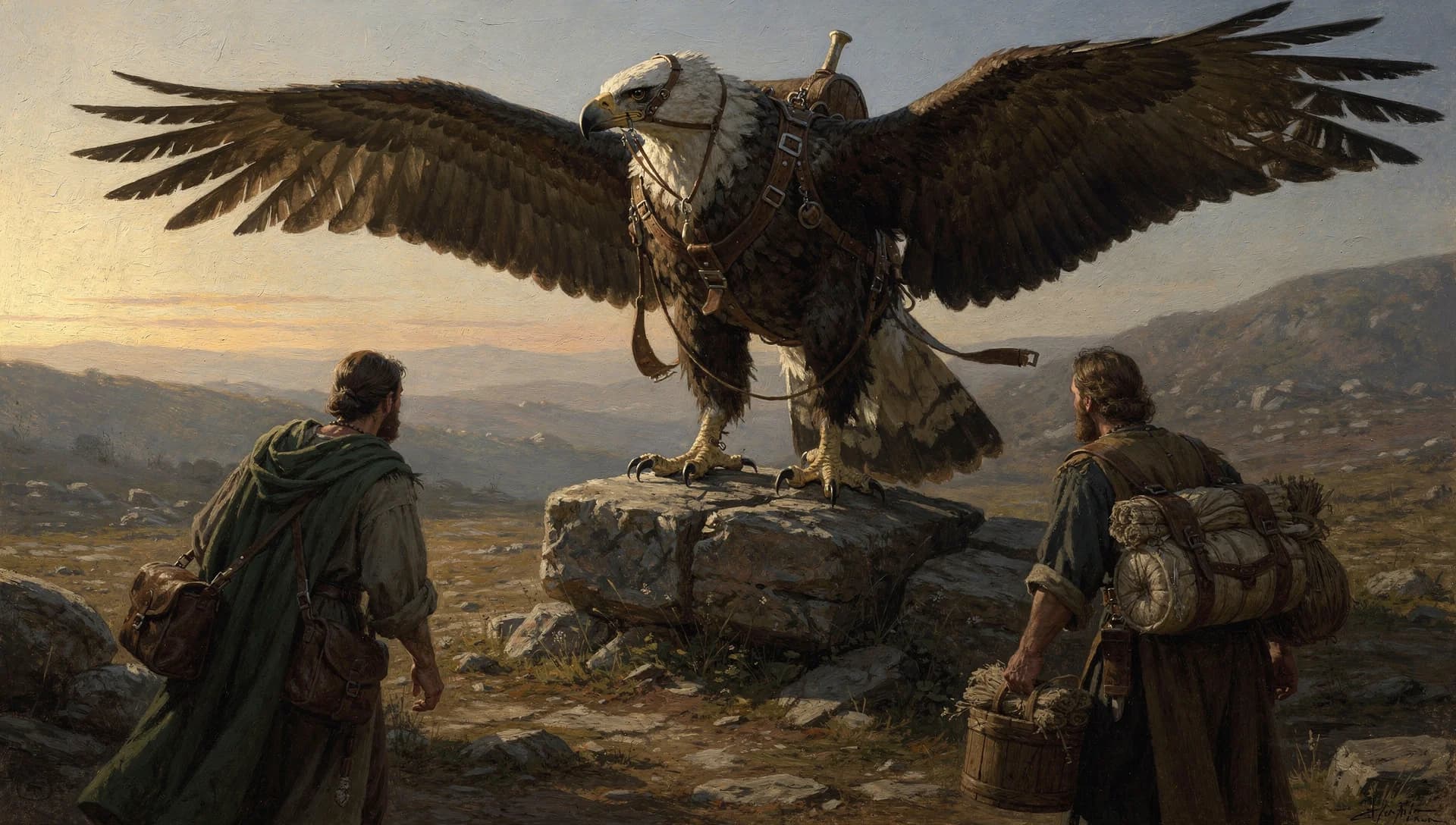
The Bird That Carried the Bull: Fandors and the Mesopotamian Anzu
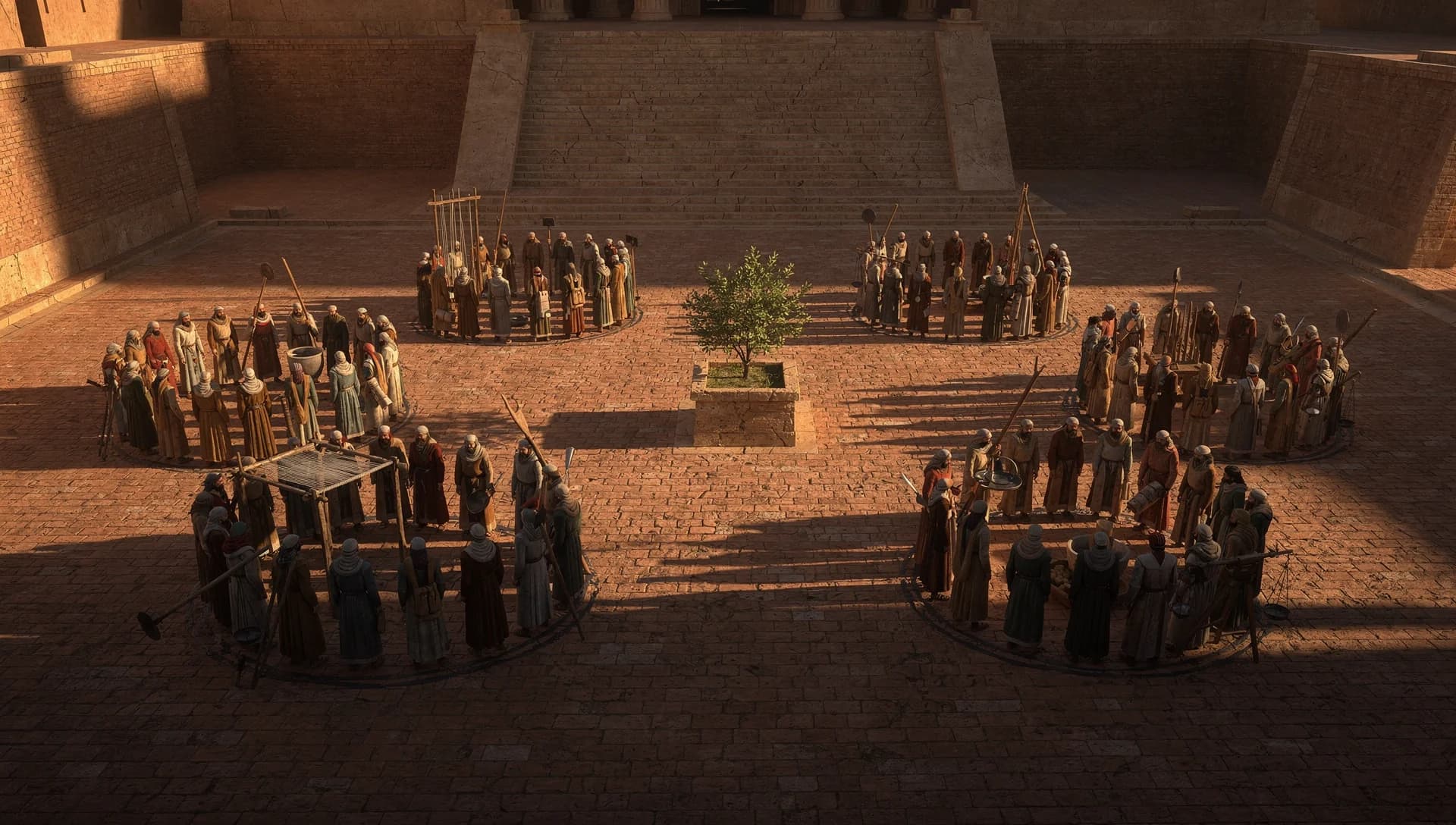
Civilization Delivered in Ten Portions: The Dalamatia Councils and the Sumerian ME
The Newsletter
Get the research behind each piece
Free. New Urantia Book explorations, the sources behind the videos, and early looks. No spam, unsubscribe anytime.
Prefer video? Follow on YouTube and Facebook.
Delivered through Substack. You can also read past issues.