
The Watchers Were Real, and the Urantia Book Has the Names
The Book of Enoch describes 200 Watchers who descended on a mountain, taught forbidden knowledge, and mated with human women to produce giants. The Urantia Book says: close, but here's what actually happened.

THE WATCHERS WERE REAL, AND THE URANTIA BOOK HAS THE NAMES
Derek Samaras | Urantia Book Network | April 2026
Series Note: This is Part 2 of a four-part series examining popular spiritual narratives, then grounding each in the actual revelation. Part 1 covered the "Galactic Federation." This one takes on the Watchers, the Nephilim, and the Book of Enoch.
A Corrupted Memory of a Real Event
The Book of Enoch tells a story that millions of people find strangely compelling: 200 celestial beings, called Watchers, descend on Mount Hermon. They teach humanity forbidden knowledge. They mate with human women. Their offspring are giants, men of terrifying power, called the Nephilim. The world is corrupted. God sends a flood to wipe the slate.
This story is experiencing a renaissance right now. Writers across Substack and YouTube are connecting Enoch to Atlantis, to Sumerian mythology, to Rome's alleged cover-up. The framework is always the same: Watchers came, taught, mated, corrupted, and then the record was suppressed.
Here's the thing. The bones of that story are real. The details are garbled.
The Urantia Book provides what appears to be the original, ungarbled version of this event, with names, dates, organizational structure, and the actual genetic mechanism behind the "Nephilim." If you've been drawn to the Enoch narrative because something about it rings true, what follows will tell you why it rings, and where the distortion crept in.
The One Hundred, Not the Two Hundred
Enoch says 200 Watchers. The number is close but inflated. The actual count was one hundred corporeal staff members, the Caligastia one hundred, volunteers from across the local system who were given physical bodies and assigned to a civilizational development mission on Urantia approximately 500,000 years ago. (66:2.3-4)
They didn't descend on a mountain. They were transported by seraphic conveyance and repersonalized at a headquarters city called Dalamatia Dalamatia, in the Persian Gulf region of Mesopotamia. The process took ten days. (66:2.9)
But here is where Enoch's memory becomes relevant. These beings really did teach. They organized into ten councils covering food production, animal domestication, predatory animal management, education, industry and trade, religion, health, art and science, tribal governance, and racial cooperation. (66:5.1)
In the Enoch tradition, the Watchers each specialize in a different forbidden art: metallurgy, weaponsmithing, astrology, sorcery, cosmetics, writing. The distortion is obvious once you see the original. These weren't "forbidden arts." They were the ten departments of a civilizational uplift program. Over hundreds of thousands of years, the details shifted, the departments became "forbidden knowledge," and the teachers became fallen angels. But the structural memory, specialized beings each responsible for a domain of human advancement, survived.
The "Sons of the Gods" and the "Daughters of Men"
This is the passage that hooks people. Genesis 6:1-4. The Nephilim. The "sons of the gods" going in to the daughters of men. The mighty men of old.
The Urantia Book quotes this passage and then explains exactly what it's describing:
"The Nephilim (Nodites) were on earth in those days, and when these sons of the gods went in to the daughters of men and they bore to them, their children were the 'mighty men of old,' the 'men of renown.'" (77:2.3)
"While hardly 'sons of the gods,' the staff and their early descendants were so regarded by the evolutionary mortals of those distant days; even their stature came to be magnified by tradition. This, then, is the origin of the well-nigh universal folk tale of the gods who came down to earth and there with the daughters of men begot an ancient race of heroes." (77:2.3)
The Nephilim were not mythological. They were the Nodites, a real race that arose from the mating of the rebel staff members with the Andonite peoples of the surrounding region. The name "Nodite" derives from their leader, Nod, who headed the commission on industry and trade and was chosen as the leader of the sixty rebels after they defected. (67:4.1-2)
Why the Offspring Were "Giants"
The Book of Enoch and Genesis both insist the Nephilim were giants, mighty men, physically superior. This isn't pure exaggeration. There's a biological mechanism behind it.
When the sixty rebel staff members were cut off from the system life circuits, they lost their immortality but retained their modified bodies. They had been constructed from the best Andonite germ plasm, which had then been modified by the powerful life-maintenance circuits of the Satania system. When they reproduced with the local Andonite population, their children were physically superior:
"Since the one hundred corporeal members of the Prince's staff carried germ plasm of the Andonic human strains, it would naturally be expected that, if they engaged in sexual reproduction, their progeny would altogether resemble the offspring of other Andonite parents. But when the sixty rebels of the staff, the followers of Nod, actually engaged in sexual reproduction, their children proved to be far superior in almost every way to both the Andonite and the Sangik peoples." (77:2.4)
"These mutant traits appearing in the first Nodite generation resulted from certain changes which had been wrought in the configuration and in the chemical constituents of the inheritance factors of the Andonic germ plasm. These changes were caused by the presence in the bodies of the staff members of the powerful life-maintenance circuits of the Satania system. These life circuits caused the chromosomes of the specialized Urantia pattern to reorganize..." (77:2.5)
The "giants" were real. They were physically superior offspring produced by modified genetics, not divine magic. The Nodites were the eighth race to appear on Urantia, and their pure-line civilization was remarkable. But separated from the system life circuits, they gradually deteriorated. Within ten thousand years their average lifespan was little more than that of the surrounding evolutionary races. (77:2.9)
The Sumerian King Lists: Hard Evidence
Here is where the UB account makes a testable claim that the Book of Enoch cannot.
Archaeologists have long puzzled over the Sumerian King List, clay tablets recording rulers who reigned for impossibly long periods. The earliest kings are listed with reigns of 20,000 to 40,000 years. As the list moves forward in time, reigns gradually shorten to historically plausible lengths.
Mainstream archaeology treats these long reigns as mythology, a literary convention. The Urantia Book says they are a compressed but real memory of Nodite lifespans:
"When archaeologists dig up the clay-tablet records of the later-day Sumerian descendants of the Nodites, they discover lists of Sumerian kings running back for several thousand years; and as these records go further back, the reigns of the individual kings lengthen from around twenty-five or thirty years up to one hundred and fifty years and more. This lengthening of the reigns of these older kings signifies that some of the early Nodite rulers (immediate descendants of the Prince's staff) did live longer than their later-day successors and also indicates an effort to stretch the dynasties back to Dalamatia." (77:2.10)
The long reigns are not pure fiction, though they are partly embellished. The UB identifies two factors: a real biological signal (a race whose founders were sustained by the life circuits of the system, whose descendants inherited a diminishing portion of that vitality) and a deliberate effort by later scribes to stretch their dynasties back to the original city. The king list is part genealogical echo, part national mythology. But the biological core is real.
Nod, Not Enlil. Van, Not Enki.
The ancient Sumerians remembered these events, but they remembered them as mythology. The teacher became a god. The administrator became a deity. The rivalry between loyalists and rebels became a divine drama.
In Sumerian religion, the two great rivals are Enki (lord of wisdom, giver of civilization, giver of language) and Enlil (the rival, the opposition, the lord of the storm). The Urantia Book account maps directly: Van, the loyal civilization-preserver, and Nod, the rebel leader. (67:4.1-2)
The Anunnaki, the "princely offspring" of Sumerian mythology, correspond to the corporeal staff themselves. The academic etymology of the word "Anunnaki" means something like "princely seed" or "offspring of An." In the UB account, the one hundred were literally the staff of the Prince, and "An" or "Anu" in the Sumerian pantheon occupies the role of the invisible sky father, the one who sends the others. This is the template of Caligastia: the unseen ruler whose authority the staff carried. (66:2.3)
The Igigi, the lesser Sumerian divine beings who served the Anunnaki, correspond to the modified Andonites who contributed their life plasm and served alongside the staff.
None of this requires Sitchin. None of it requires ancient astronaut theory. The Sumerian memory is a garbled recollection of a real event that the UB reports in full, with names and dates and departmental assignments.
Why Enoch Was Removed from the Canon
This is where the Substack writers get interesting. Several have argued that the Book of Enoch was deliberately suppressed by the early church because it reveals too much about celestial intervention. Some frame it as a conspiracy by Rome.
The truth is probably less dramatic but more instructive. The Book of Enoch was removed from the Western canon because its cosmology was confusing, its angelology was elaborate and contradictory, and it didn't fit comfortably into the theological framework that the church fathers were trying to build. Jerome and Augustine both pushed back against it. But the Ethiopian church kept it, which is why it survived.
The UB offers a reason why these texts are confused in the first place:
"These transactions, together with the literal creation of special bodies for the Caligastia one hundred, gave origin to numerous legends, many of which subsequently became confused with the later traditions concerning the planetary installation of Adam and Eve." (66:2.8)
The suppression wasn't a conspiracy to hide the Watchers. It was the natural result of centuries of garbled retelling. By the time the church councils met, the original events were so buried under layers of myth that the texts no longer made coherent sense. The Book of Enoch isn't a blueprint that was classified. It's a memory that was corrupted by time.
The Urantia Book restores what time took.
The Redemption the Enoch Tradition Never Imagined
The Book of Enoch ends its Watcher story with judgment: a flood, imprisonment, divine wrath. The Nodite bloodline is treated as a contamination to be purged. But the UB tells a very different second act.
Roughly 35,000 years ago, Adamson, the firstborn son of Adam and Eve, traveled north from the second garden in search of Van's old highland headquarters. There he found Ratta, a woman who claimed to be the last pure-line descendant of two of the fallen Prince's staff members. She was Nodite royalty, the end of a line that traced directly back to the sixty rebels. (77:5.5)
Adamson married her. Their union combined the two most potent genetic streams on the planet: the violet race of Adam (the biological uplift mission) and the Nodite race (descended from the modified staff). Together they had sixty-seven children. But every fourth child born to them was "of a unique order. It was often invisible." (77:5.6)
These invisible children were the progenitors of the secondary midwayers. Sixteen of Adamson and Ratta's children possessed this peculiar capacity. Organized into eight couples, each pair produced 248 midwayers over the course of their lives, for a total of 1,984 secondary midway creatures. (77:6.2)
These beings are not ghosts. They are not angels. They are a unique order of life, physically energized by the Adamic technique, spiritually encircuited by the seraphic, and intellectually endowed with a morontia transition type of mind. (38:9.7) They operate just outside the range of mortal vision, and they have been serving on this planet ever since.
Here is the part the Watcher narrative misses entirely: the bloodline of the rebels was not destroyed. It was redeemed. The same Nodite genetics that the Book of Enoch frames as divine contamination were, in the UB account, brought into union with the Adamic mission and produced something extraordinary, a permanent corps of superhuman servants who still work on behalf of this world.
The secondary midwayers authored Part IV of the Urantia Book itself, the 700-page account of the life and teachings of Jesus. (121:0.1, 121:8.12) The very beings who carry the genetic legacy of the "fallen Watchers" are the ones who gave us the most complete record of the Creator Son's human life.
That is not a story of contamination and judgment. That is a story of origin, rebellion, and redemption.
The Real Lesson
The Watcher narrative is popular right now because it speaks to a deep intuition: something went wrong on this planet, at a level deeper than politics or economics or human foolishness. Beings who should have been trustworthy broke faith. And the consequences are still playing out.
That intuition is correct. But the response matters.
If you read the Watcher story as evidence that "Rome deleted the truth" and stop there, you've traded one set of incomplete answers for another. If you read it as evidence that the universe is hostile and the "gods" are predatory, you've drawn the wrong conclusion from a real event.
The actual record is more nuanced and more hopeful. Yes, sixty of the one hundred defected. But forty held. Van and Amadon stood for seven years against every philosophical argument a brilliant, experienced, formerly loyal administrator could bring against them, and then they stayed on this planet for 150,000 more years to keep the thread of civilization alive.
The rebellion was real. The quarantine is real. But so is the response. The Melchizedek receivers arrived. Van organized outposts. Machiventa incarnated as an emergency measure. Michael bestowed himself as a human being and lived an entire human life. The response is always bigger than the rebellion.
The Book of Enoch remembers the fall. The Urantia Book remembers the whole story, the fall and the rescue, the rebellion and the loyalty, the corruption and the recovery. Origin, history, and destiny.
That's worth reading.
Explore Dalamatia, the Land of Nod, Dilmun, and all 174 UB-verified sites on the Interactive Planetary Map.
For how the Nodite legacy shaped everything that followed: Dalamatia Is Atlantis
For how this history reframes modern contact and UAP claims: You Deserve a Better Map
Next in this series: "Dalamatia Is Atlantis, and Here's the Archaeology" connects the UB's first civilization to the persistent Atlantis tradition and the physical evidence in the Persian Gulf.
All citations reference The Urantia Book by Paper:Section.Paragraph. The full text is freely available at urantia.org.
Connecting Articles
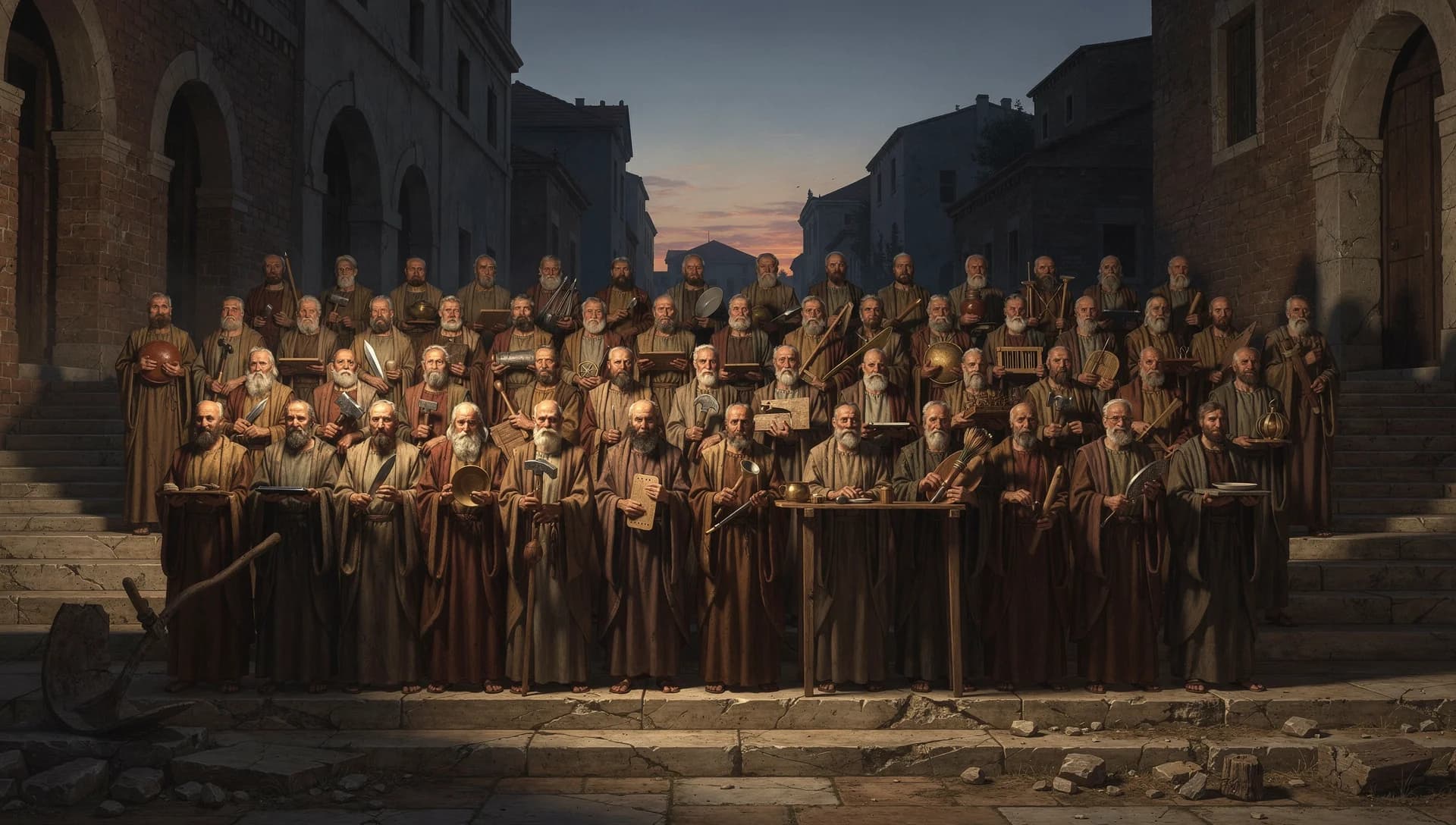
The Corporeal Staff and the Anunnaki: When Mainstream Etymology Already Says the Answer
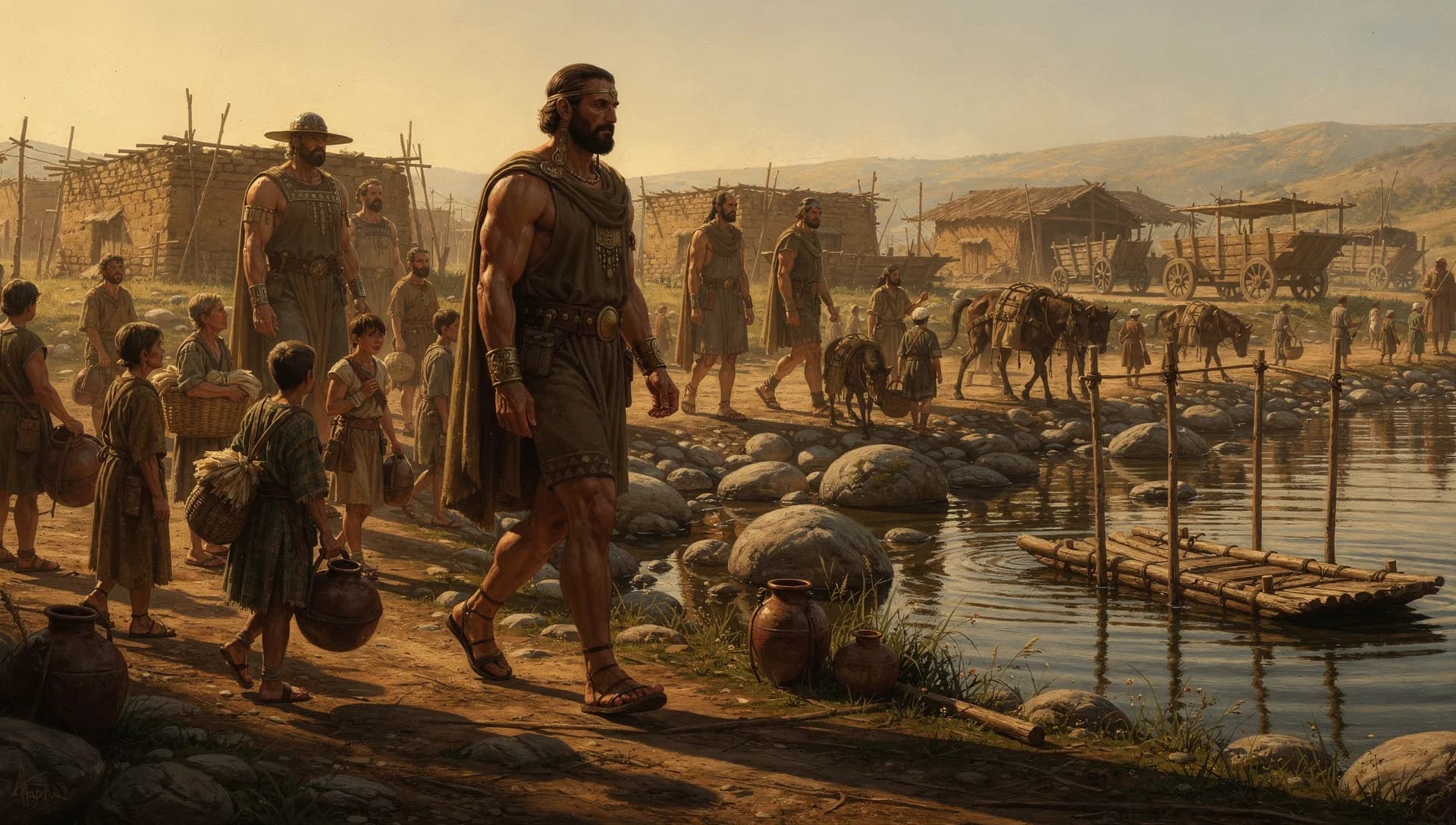
The Nodites and the Nephilim: The Most Direct Mythology Decode in the Urantia Book
Rh-Negative Blood and the Nephilim Claim: What the Record and the Genetics Say

The Prince Who Fell: Caligastia and the Truth About the Devil
The Newsletter
Get the research behind each piece
Free. New Urantia Book explorations, the sources behind the videos, and early looks. No spam, unsubscribe anytime.
Prefer video? Follow on YouTube and Facebook.
Delivered through Substack. You can also read past issues.