
Dalamatia Is Atlantis: The Archaeology of the First City
Every culture remembers a great civilization that sank beneath the sea. Plato called it Atlantis. The Sumerians called it Dilmun. The Urantia Book gives you the address.

DALAMATIA IS ATLANTIS, AND HERE'S THE ARCHAEOLOGY
Derek Samaras | Urantia Book Network | April 2026
Series Note: This is Part 3 of a four-part series examining popular spiritual narratives, then grounding each in the actual revelation. Part 1 covered the Galactic Federation. Part 2 covered the Watchers and Nephilim. This one takes on Atlantis.
The Memory That Won't Die
Every culture on earth has some version of the same story. A great civilization, technologically advanced, spiritually significant, that was destroyed by water and sank beneath the sea. Plato gave it its most famous name. The Sumerians recorded it on clay tablets. Indigenous traditions from the Americas to Southeast Asia carry their own versions. The specifics shift but the structure stays constant: an advanced people, a great city, a catastrophic submergence, a scattered remnant carrying fragments of a lost golden age.
People keep looking for Atlantis because the memory is too widespread and too consistent to be pure invention. Theories have placed it in the Mediterranean, off the coast of Spain, in the Caribbean, under the Antarctic ice. None of them have produced the ruins.
The Urantia Book says the ruins are under the Persian Gulf. And the city's name was Dalamatia. Dalamatia
The City in the Gulf
Five hundred thousand years ago, the Planetary Prince established his headquarters in the Persian Gulf region, in the district corresponding to later Mesopotamia. (66:3.1)
The city was called Dalamatia, named after the Prince's associate Daligastia. It was a walled settlement, forty feet high, laid out in ten subdivisions corresponding to the ten councils of the corporeal staff. At its center stood a temple to the unseen Father, three stories high. Surrounding that temple were the twelve administrative chambers of the Prince and his associates. (66:3.3-5)
The city was built of brick. It served as the model for home building and village architecture across the surrounding region. It operated as the center of planetary civilization for almost three hundred thousand years. (66:7.16)
Then the rebellion came. And afterward, the sea.
"The remnants of this, one of the oldest civilizations, are to be found in these regions of Mesopotamia and to the northeast and northwest. But still older vestiges of the days of Dalamatia exist under the waters of the Persian Gulf, and the first Eden lies submerged under the eastern end of the Mediterranean Sea." (78:7.7)
The city is beneath the Gulf. The Urantia Book is not ambiguous about this. The first center of human civilization on this planet, the headquarters of the Planetary Prince's mission, lies underwater in one of the most geologically active shallow-sea regions on earth.
Dilmun: The Name That Survived
After Dalamatia sank, the Nodites (descendants of the rebel staff) moved north and east and founded a new city they called Dilmun, as their racial and cultural headquarters. (77:3.1)
This is where the Sumerian connection becomes powerful.
Archaeologists know Dilmun. It is a real place: the ancient civilization centered on modern-day Bahrain, a major Bronze Age trading center in the Persian Gulf. Sumerian tablets describe Dilmun as a paradise, a holy land, a place "where the Gods first blessed mankind with the example of civilized and cultured life." (77:4.8)
But here is the detail that makes the UB account sing. The Sumerians didn't just remember one Dilmun. They confused three separate places under the same name:
"The Egyptians called this city of ancient glory Dilmat, while the later Adamized Sumerians confused both the first and second Nodite cities with Dalamatia and called all three Dilmun." (77:4.8)
Three layers:
- Dalamatia, the original Prince's city, now under the Persian Gulf. Founded roughly 500,000 years ago.
- Dilmun #1, the Nodite city founded after Dalamatia sank, likely in southern Iran near the Gulf coast. Founded roughly 200,000 years ago.
- Dilmun #2, the Bronze Age settlement on Bahrain that archaeologists have excavated. Dating to roughly 3000 BCE.
The Sumerians knew all three existed, but by their era the first two were already ancient beyond reckoning. So they collapsed the memories into one name and one paradisiacal tradition. The "earthly paradise" they wrote about on their clay tablets was a composite of three separate civilizations, each one further back in time, each one associated with the same stretch of the Persian Gulf.
This explains something that has puzzled historians for decades: why the Sumerian paradise tradition is so specific about location (Persian Gulf) and so vague about chronology. They knew where. They had lost when.
The Sumerians Appeared from Nowhere
One of the great unsolved puzzles of archaeology is the sudden appearance of the Sumerians. They show up on the historical stage with a fully formed civilization: temples, metallurgy, agriculture, animal domestication, pottery, weaving, commercial law, civil codes, religious ceremony, and an old system of writing. No identifiable precursor culture. No gradual development arc.
The UB explains this:
"Investigators will never be able to trace out and follow these tribes back to the beginning of the Sumerians, who had their origin two hundred thousand years ago after the submergence of Dalamatia. Without a trace of origin elsewhere in the world, these ancient tribes suddenly loom upon the horizon of civilization with a full-grown and superior culture, embracing temples, metalwork, agriculture, animals, pottery, weaving, commercial law, civil codes, religious ceremonial, and an old system of writing." (77:4.7)
The Sumerians were the later descendants of the Nodites, the people who came out of Dalamatia and Dilmun. Their civilization didn't spring from nothing. It was the degraded but still impressive remnant of a cultural tradition hundreds of thousands of years old. Their writing system originated in the first Dilmun. (77:4.7) Their laws and religious practices were echoes of the ten councils. Their impossibly old king lists were genuine genealogical memories of Nodite rulers whose lifespans had not yet declined to mortal norms.
When mainstream archaeology says the Sumerians "appeared suddenly," the Urantia Book says: of course they did. You're looking at the tail end of a civilization that started half a million years ago, and most of the evidence is under the Persian Gulf.
Bablot, Babel, Babylon: The Name Migration
The famous Tower of Babel story also traces back to the Nodites. About fifty thousand years after the death of Nod, as the Nodite population around Dilmun grew too large, a leader named Bablot proposed building a great temple of racial glorification. (77:3.1-2)
The building project collapsed because of a three-faction dispute: one group wanted a racial memorial, one group wanted a cultural center, and a minority wanted a place of worship to the Father of all. The third group was voted down. The other two factions fought "until well-nigh obliterated" (77:3.8).
The Genesis story of the "confusion of tongues" is a compressed, garbled memory of this civil war. The original disagreement wasn't about language. It was about purpose.
And the name migrated: Bablot became Bablod, became Babel. (77:3.3) Later still, barbarian cavalrymen "sought to build a third tower of Babel and later adopted the term as their national name," giving us Babylon on the Euphrates. (78:8.4)
Gobekli Tepe: The Fandor Memory
This brings us to one of the most spectacular archaeological finds of the last century: Gobekli Tepe, in southeastern Turkey, dated to approximately 9,500 BCE.
Gobekli Tepe's T-shaped pillars are carved with animal reliefs. Among the most prominent images are oversized birds, depicted in carrying or transporting postures. Pillar 43, the so-called Vulture Stone, shows a bird figure dominating the composition. No living species matches the scale depicted.
The Urantia Book describes a creature called the fandor, a giant passenger bird trained by the second council of the Prince's staff (the board of animal domestication and utilization) at Dalamatia. Fandors were descended from a ten-foot ostrich-like ancestor (61:1.9), could speak many words of the local languages (52:1.5), and served as transportation for the staff and later the Adamites, carrying one or two passengers for distances of over five hundred miles. They went extinct more than thirty thousand years ago. (66:5.6)
Gobekli Tepe was carved roughly 9,500 BCE. The fandors had been extinct for over twenty thousand years by that point. But the people who built Gobekli Tepe were the direct institutional descendants of the Nodite civilization, people whose guild traditions stretched back hundreds of thousands of years. The oversized birds on the pillars are not depictions from life. They are cultural memories, carved by a people whose ancestors had flown on them.
And the memory didn't survive only at Gobekli Tepe. It survives in the Anzu bird of Sumerian mythology (a giant eagle who carried people and animals). In the Garuda of Vedic India (mount of Vishnu, the cosmic preserver). In the Thunderbird of Indigenous North American tradition. In the Roc, the Phoenix, and a dozen other cultural echoes of a creature that was real and that was remembered.
Why Plato Got the Location Wrong
Plato placed Atlantis beyond the Pillars of Hercules, in the Atlantic Ocean. This is the detail that has sent most Atlantis hunters in the wrong direction.
But Plato was working with information that had been filtered through at least three civilizations: Egyptian, Greek, and whatever oral tradition preceded both. The Egyptians called the lost paradise "Dilmat." By the time the story reached Athens, the geography had shifted. The moral and structural elements survived (advanced civilization, divine origins, catastrophic destruction by water, scattered remnant), but the location had been displaced westward.
The UB account explains why the location drifted. The original memory was of a city in the Persian Gulf, a place that was already ancient beyond imagining when the first Sumerians wrote it down. The Sumerians, the closest people to the original site, kept the geography right. But as the story traveled west through Egypt and Greece, the specifics eroded while the structure held.
Atlantis is not in the Atlantic. It's in the Gulf, where the revelation says it is, and where the densest concentration of cultural memory consistently points.
The Composite Memory: Dalamatia and Eden
There is one more layer to the Atlantis tradition that most researchers miss. The "sunken paradise" memory is not just one place. It is at least two.
The first Garden of Eden Garden of Eden, the Adamic headquarters established roughly 38,000 years ago, was located on a long narrow peninsula projecting westward from the eastern shores of the Mediterranean Sea (73:3.1). That peninsula also sank, with the first Eden submerged under the eastern end of the Mediterranean Sea (78:7.7).
The Sumerians knew about both submergences. They "knew of the first and second Edens but, despite extensive intermarriage with the Adamites, continued to regard the garden dwellers to the north as an alien race" (77:4.9). So the Sumerian paradise tradition was already a composite: Dalamatia (under the Gulf), Dilmun (the successor cities), and the Garden of Eden (under the Mediterranean).
By the time this composite memory reached Plato through Egyptian intermediaries, it had been compressed into a single story: one great civilization, one catastrophic submergence, one lost paradise. But the original memory was of multiple civilizations, multiple submergences, across hundreds of thousands of years.
Robert Sarmast, a Urantia Book reader and researcher, conducted sonar mapping expeditions in the eastern Mediterranean searching for the physical remains of the first Garden. His work, documented in Discovery of Atlantis, identified underwater structures near Cyprus that correspond to the UB's geographic description. Whether or not those specific structures prove to be the Garden, his research demonstrates that the UB account points to real, testable locations, not mythology.
What This Means
The Atlantis search has always been motivated by the right instinct. People sense that human civilization is older and deeper than the textbook version admits. That somewhere, at some point, something remarkable was built and something terrible happened to it. That the scattered fragments of myth and legend across dozens of cultures can't all be coincidence.
They're not coincidence. They're memory.
The Urantia Book doesn't ask you to believe in Atlantis as a mystery. It tells you what the place was called, who built it, what they were trying to accomplish, why it failed, and where the ruins are. It names the councils, the leaders, the successor cities, and the migration patterns of the people who carried the memory forward through Dilmun, through Sumer, through Babylon, and into the traditions we still tell.
You can visit Bahrain today and stand where Dilmun #2 was. You can visit Gobekli Tepe and see the fandor birds carved in stone. You can read the Sumerian King List and watch the lifespans shorten as the Nodite bloodline diluted over millennia.
And the Nodite legacy did not end with dilution. Roughly 35,000 years ago, Adamson, firstborn of Adam and Eve, married Ratta, the last pure-line descendant of two of the Prince's staff. Their union combined the violet race with the Nodite bloodline. Together they produced sixty-seven children, and from sixteen of those children came the secondary midwayers, 1,984 superhuman beings who still serve on this planet today. (77:5.5-6, 77:6.2) The genetic stream that began at Dalamatia, that survived the rebellion, the submergence, and the long Nodite decline, was brought into permanent service through a union the Atlantis seekers have never heard of.
The evidence is not hidden. It's just been filed under the wrong name.
Explore Dalamatia, Dilmun, Gobekli Tepe, and all 174 UB-verified sites on the Interactive Planetary Map.
For the Andite civilization that carried this legacy forward: The Andite Emergence
For how this history reframes UAP and contact claims: You Deserve a Better Map
Next in this series: "What Genuine Cosmic Contact Looks Like" examines the standards the Urantia Book sets for evaluating claims of celestial contact.
All citations reference The Urantia Book by Paper:Section.Paragraph. The full text is freely available at urantia.org.
Connecting Articles
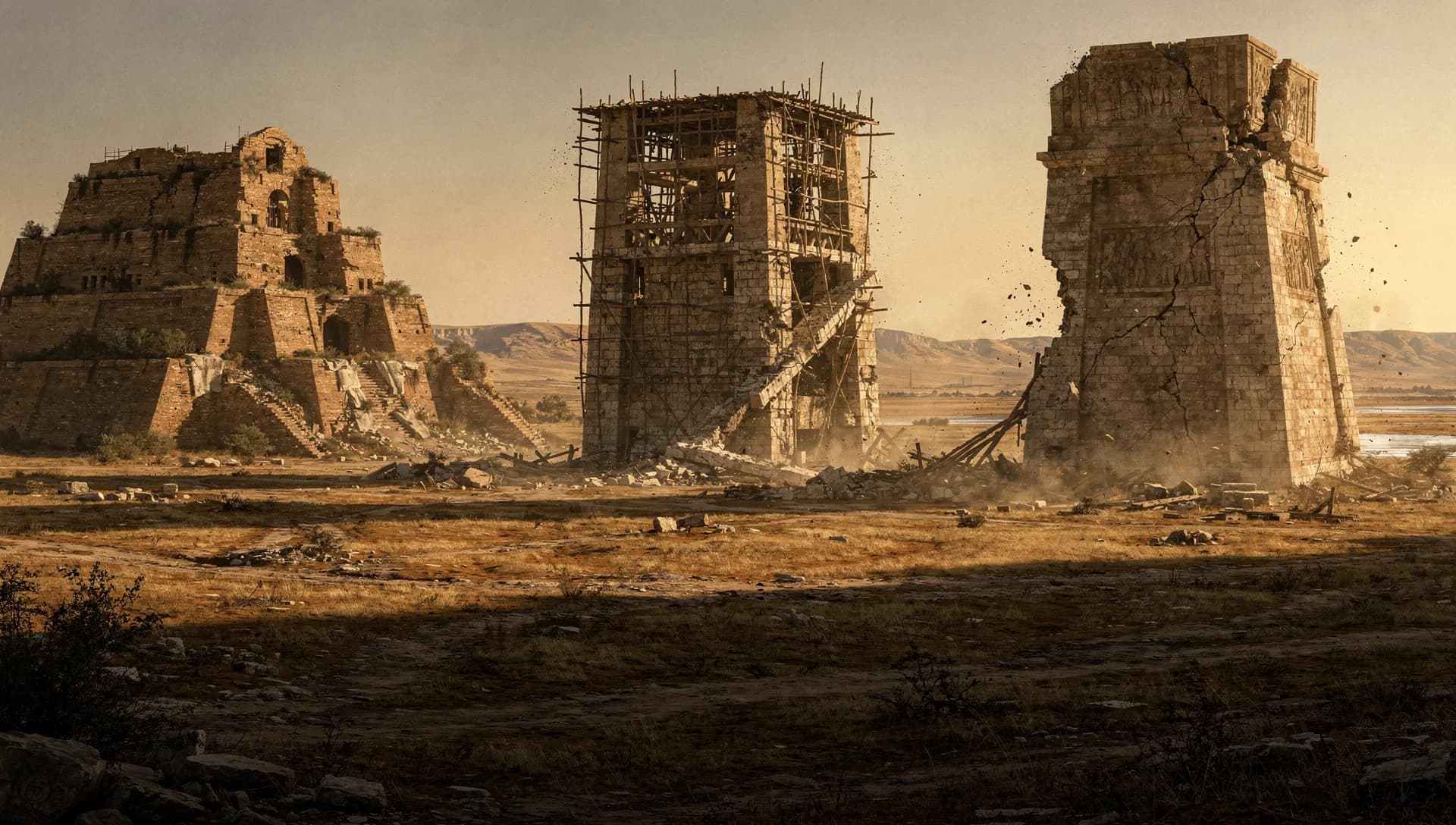
Three Towers, One Name: Bablot, Bablod, Babel, and the Migration of the Tower Story
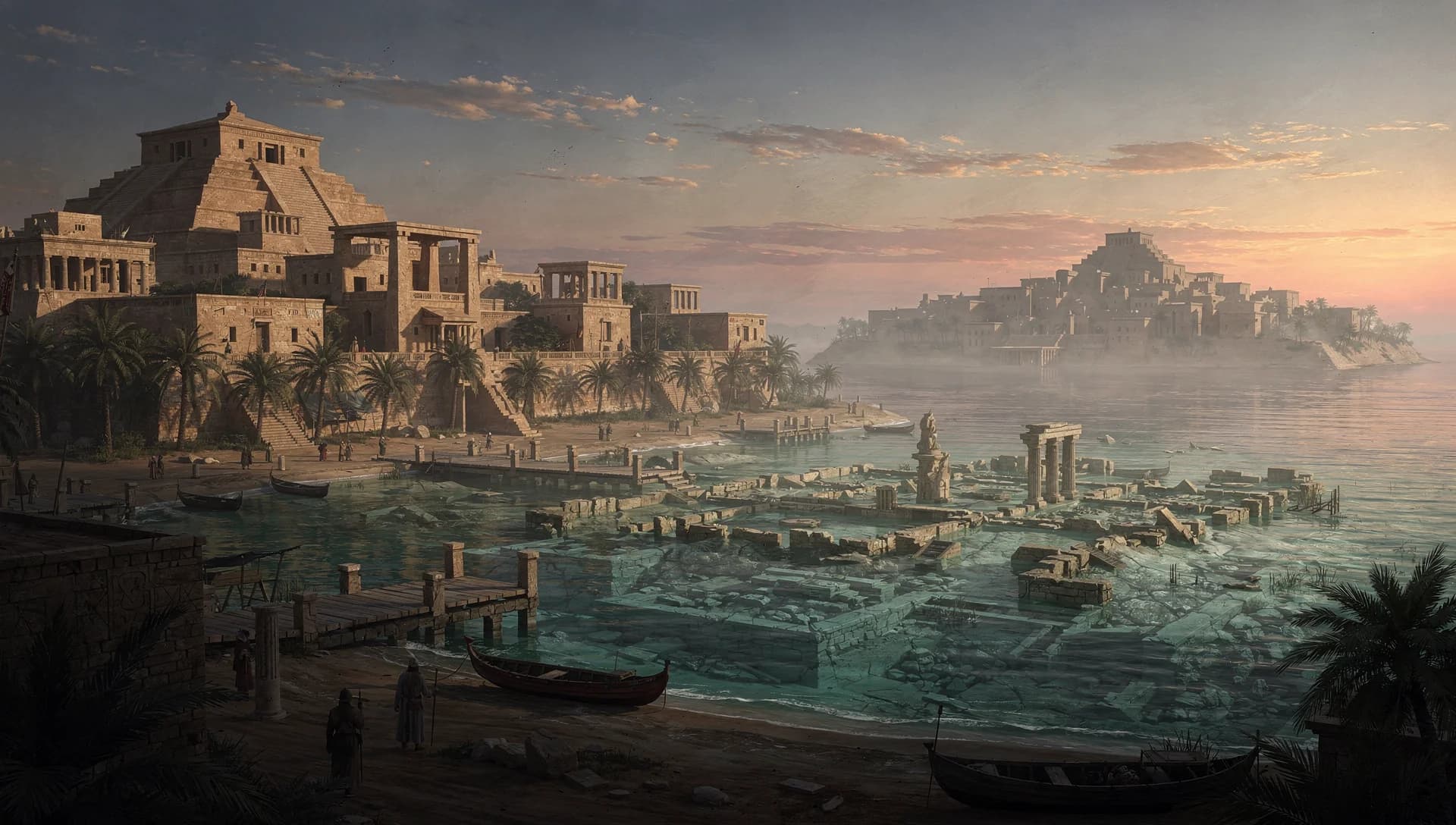
Two Dilmuns, Not One: Bahrain, the Nodite Headquarters, and the Confused Sumerian Paradise
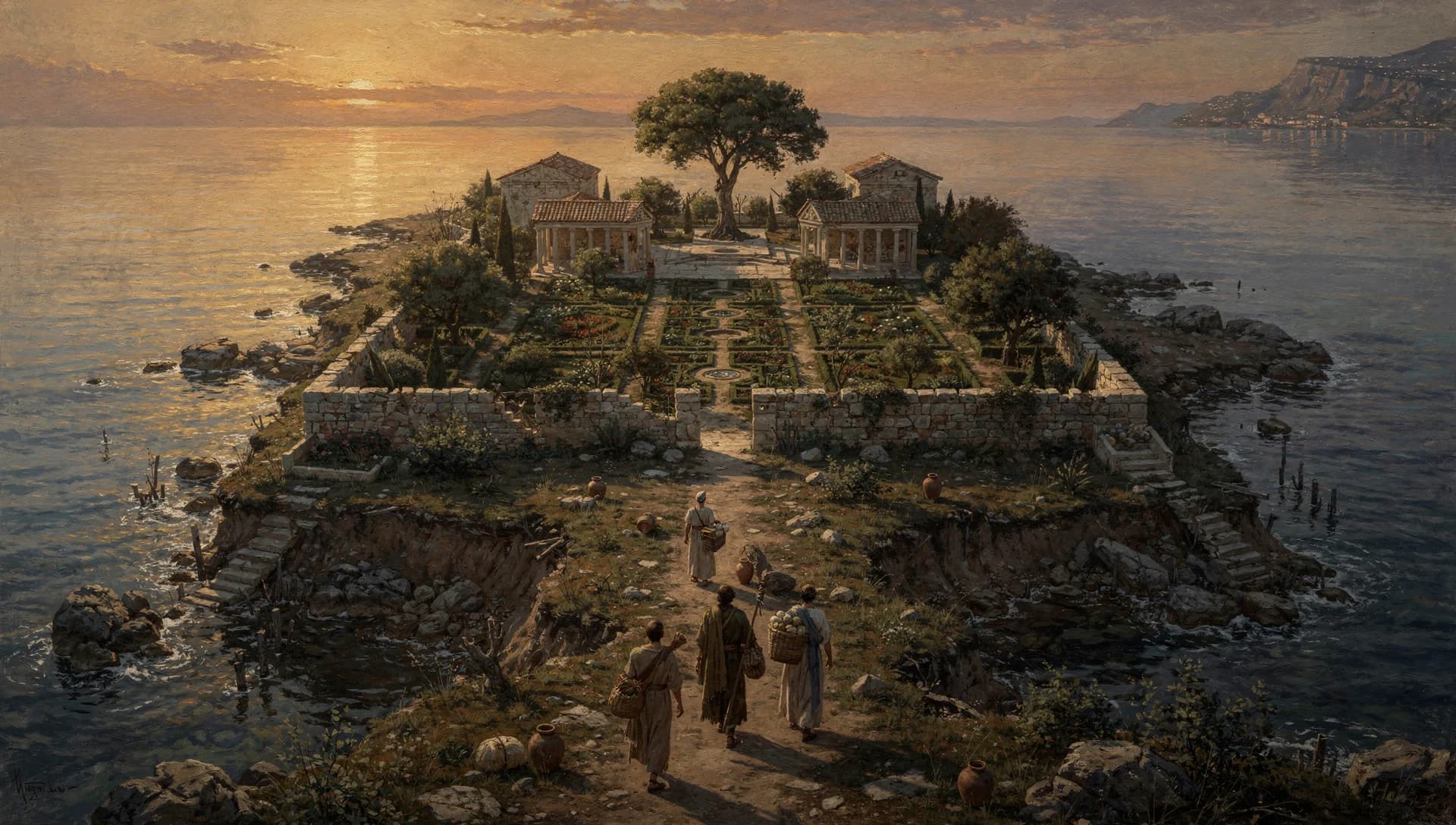
The Paradise That Sank: Eden, Atlantis, and Sumerian Dilmun
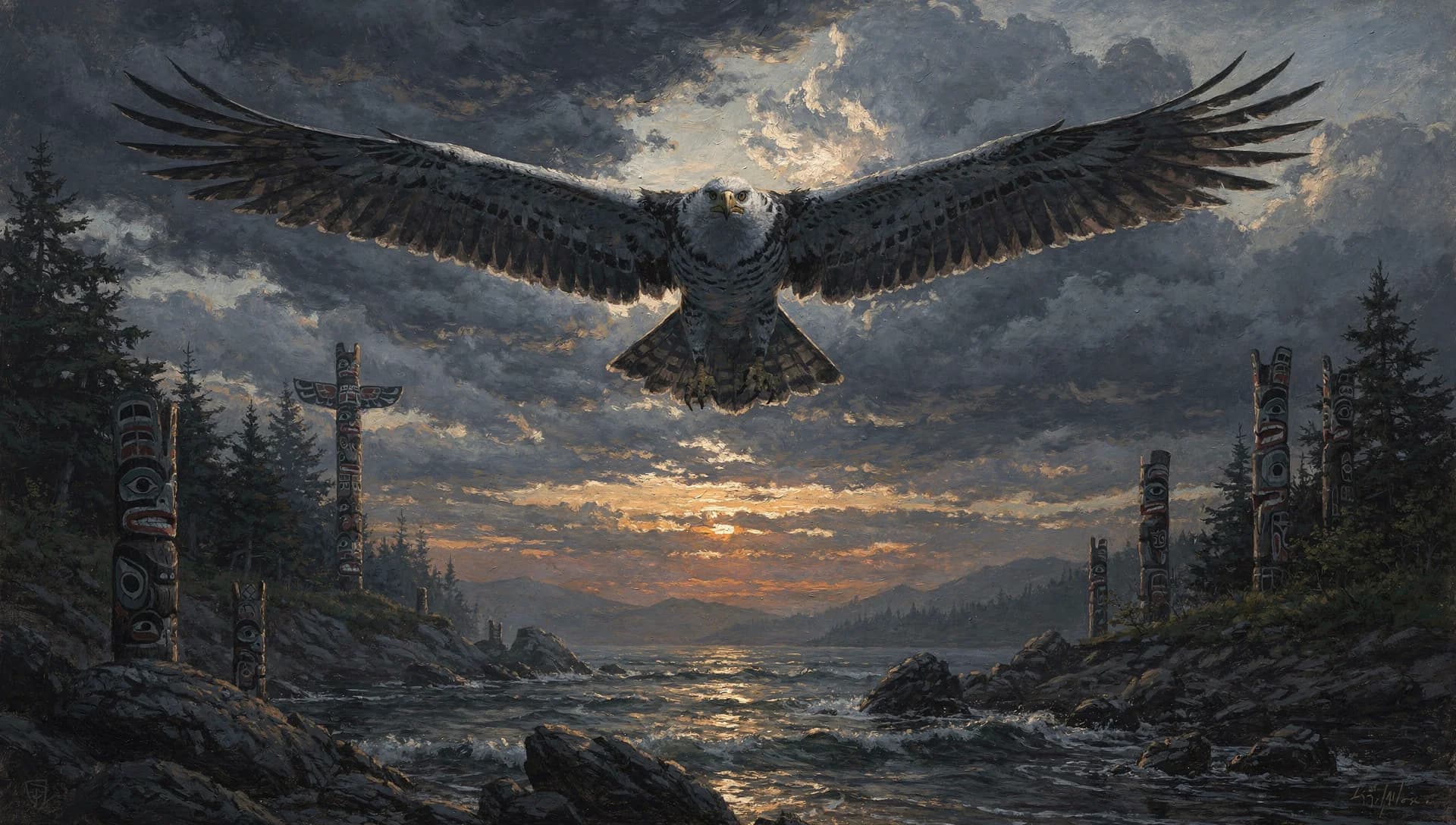
The Thunderbird Was Real: Fandors and the Indigenous American Giant Bird Tradition
The Newsletter
Get the research behind each piece
Free. New Urantia Book explorations, the sources behind the videos, and early looks. No spam, unsubscribe anytime.
Prefer video? Follow on YouTube and Facebook.
Delivered through Substack. You can also read past issues.