
The Bird That Carried the Hero: Adamson, Fandor, and the Hindu Garuda
Hindu iconography is saturated with the image of Vishnu and his later avatar Krishna mounted on Garuda, the giant divine bird who serves as the hero's aerial vehicle. The motif is specific, widespread, and old. The Urantia Book records a historical antecedent: the firstborn of the violet race riding a fandor, a real trained giant bird used by the Dalamatia staff for aerial transport.
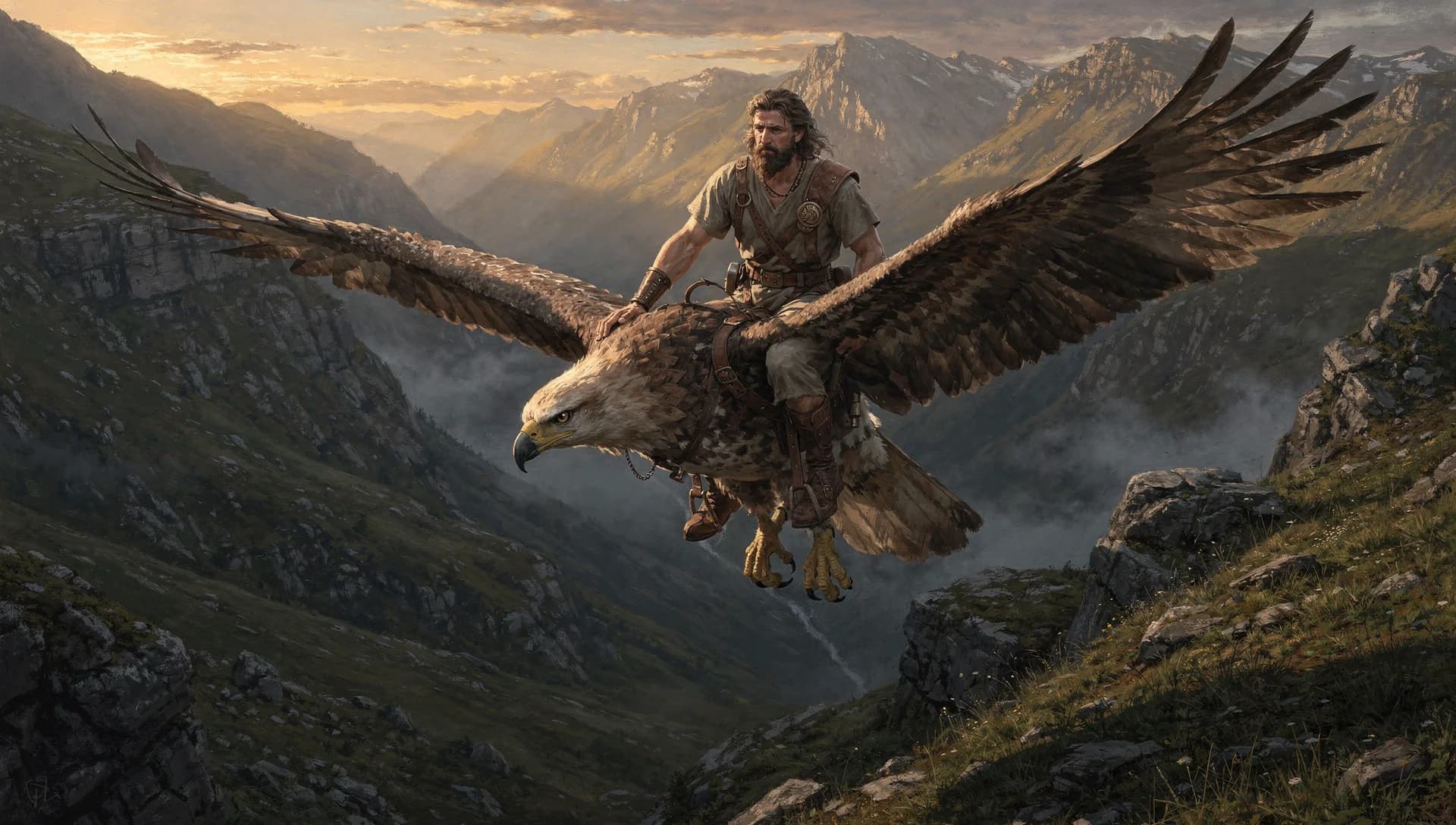
Adamson riding Fandor = Krishna / Vishnu riding Garuda, giant divine bird
This article expands on the decoder mapping. For the side-by-side card and quick reference, see the mapping page.
The Bird and Its Rider
Hindu iconography preserves one of the most consistent images of a bird carrying a rider in all of world religious art. Vishnu, and by extension his avatar Krishna, is depicted across millennia of sculptural and pictorial tradition mounted on Garuda, a giant bird whose scale is explicitly sufficient to carry the god across the heavens. The image appears on temple reliefs from the Gupta period (fourth to sixth century CE) through the Chola, Hoysala, and Vijayanagara periods, and it persists into modern popular iconography.
The structural features are specific. A superhuman mounted figure. A bird of sufficient size to carry that figure. A relationship of trust and service between rider and bird. The motif does not appear, in this form, in the ancient art of the Near East outside the Anzu-bird tradition of Mesopotamia, which is treated in a separate decoder article. The Hindu tradition's persistent interest in the mounted rider suggests that the underlying memory is specific to the cultural substrate from which Hinduism emerged.
The Urantia Book places a historical pairing of bird and rider at the root of the Hindu religious substrate: the Adamsonite civilization's use of fandors as passenger birds.
What the Urantia Book Says
The fandor, a giant bird trained by the Caligastia staff's council on animal domestication, is described in Paper 66:
"It was in these days that carrier pigeons were first used, being taken on long journeys for the purpose of sending messages or calls for help. Bon's group were successful in training the great fandors as passenger birds, but they became extinct more than thirty thousand years ago." (66:5.6)
The fandor tradition was carried forward through the loyal staff after the rebellion and was available to the Adamic household. Adam and Eve used fandors for their aerial tour of the Garden of Eden:
"The third day was devoted to an inspection of the Garden. From the large passenger birds—the fandors—Adam and Eve looked down upon the vast stretches of the Garden while being carried through the air over this, the most beautiful spot on earth." (74:3.4)
By the time of Adamson's departure from the second garden, fandors were part of the cultural repertoire the Caligastia loyalists and their Adamic successors had preserved. Adamson's travels to the north, his establishment of the Kopet Dagh civilization, and his periodic return journeys south to visit his parents all place him in a setting where the fandor as aerial vehicle was available:
"Adamson lived for 396 years. Many times he returned to visit his father and mother. Every seven years he and Ratta journeyed south to the second garden, and meanwhile the midwayers kept him informed regarding the welfare of his people." (77:5.7)
The text does not state explicitly that Adamson rode fandors, and this article does not claim that it does. What the text supports is the surrounding context. The fandor was the aerial vehicle of his grandparents on both sides. Adam and Eve rode them in Eden, and Ratta was the last pure-line descendant of the corporeal staff whose council had trained them. The seven-year round-trip visits between the Kopet Dagh and the second garden would have been considerably eased by fandor transport. The mounted figure on a great bird was, on the Urantia account, a real feature of the world Adamson lived in.
What the Urantia Book states directly is the cultural transmission. The Adamsonite substrate "persisted to become a latent part of the cultural potential which later blossomed into European civilization" (77:5.9), and in the Indian case the same passage numbers Adamson's descendants among the Andite-Aryan invaders of India (77:5.10). The Andite expansion eastward is described broadly:
"The Andites not only migrated to Europe but to northern China and India, while many groups penetrated to the ends of the earth as missionaries, teachers, and traders." (78:5.5)
If the Adamsonite civilization preserved and used fandors for transport, the memory of a superhuman figure mounted on a giant bird would travel with these people into the substrate that later produced Hindu iconography.
What the Ancient Source Says
The Garuda figure is attested in Hindu literature from a very early period. The Mahabharata (composed across the fourth century BCE to fourth century CE) includes the extensive "Story of Garuda" (Mahabharata 1.14 to 1.34), which tells of Garuda's birth, his theft of the amrita (the nectar of immortality) from the gods, and his eventual service as Vishnu's vahana (mount). The Garuda Purana is devoted primarily to funerary theology but includes substantial material about Garuda himself. The Ramayana treats Garuda as the supreme bird whose wings block out the sun.
The iconographic record is dense. Gupta-period temple sculpture already renders Vishnu on Garuda at monumental scale. T. A. Gopinatha Rao's Elements of Hindu Iconography (Law Printing House, Madras, 1914 to 1916; reprinted Motilal Banarsidass) documents the iconographic conventions. The Garuda is rendered as part eagle and part human, of sufficient scale to carry Vishnu across the heavens and to engage serpents (the Nagas) as adversaries.
Doris Srinivasan's Many Heads, Arms, and Eyes: Origin, Meaning, and Form of Multiplicity in Indian Art (Brill, 1997) places Garuda in the broader iconographic context of the Indian tradition of animal mounts. The comparative Indo-European tradition of a divine hero mounted on a giant bird is narrower than is sometimes claimed. Specific parallels exist: the Mesopotamian Anzu (treated in the Fandor and Anzu decoder article), the Thunderbird of Indigenous North American traditions, the Persian Simurgh. What distinguishes the Hindu Garuda from these other traditions is the specific and persistent coupling with a single mounted rider over millennia of iconographic development. Most other giant-bird traditions are untamed. Garuda is not. Garuda serves.
The service relationship is the structural feature the Urantia account matches. The fandor, as Paper 66 describes, was a trained passenger bird. The bond between bird and rider was one of service. The bird carried specific riders with whom it had been trained, under the authority of a specific civilization's programs. That is not the figure of a wild bird or a predator. It is a domesticated bird at great scale. That is also the Hindu Garuda's distinctive feature.
Why This Mapping Matters
The Hindu Garuda tradition is structurally different from the Mesopotamian Anzu tradition. The Anzu is typically wild, adversarial, a storm spirit. The Garuda is tamed, serving, a dedicated mount. The difference is not minor. It reflects two different aspects of the original fandor tradition. The Anzu form preserves the memory of the large bird as a natural phenomenon, predatory and untamed. The Garuda form preserves the memory of the large bird as a specific civilizational achievement, trained, serving, and paired with a rider.
The Urantia Book's account of the fandor includes both aspects. Bon's council achieved the service form, the bird trained to carry specific riders in specific contexts. This is the Garuda aspect. The same bird, encountered outside that training relationship, would appear to nearby peoples as the wild Anzu: a giant bird, capable of carrying off large animals, seen in the skies but owned by no one. Different neighboring peoples would preserve different aspects of the bird depending on whether they had met it in its trained form or its wild form.
The Indian tradition, inheriting its substrate from the Andite and Aryan migration out of the Kopet Dagh, inherited the trained aspect in particular. The Adamsonite civilization was a patron of the fandor training tradition, and its cultural substrate carried the memory of the mounted rider forward. The Mesopotamian tradition, in a region where the bird was more likely met as a natural predator, preserved the wild aspect.
Both traditions are preserving parts of the same real historical animal. The Urantia Book supplies the integrating frame. The fandor was a real species, trained by the Dalamatia council, used by Adam and Eve and their descendants, and extinct by the time literate civilizations emerged. Different neighboring peoples preserved different aspects of the memory. The Hindu Garuda is the trained and serving aspect. The Mesopotamian Anzu is the wild and powerful aspect. That a single historical bird seeded both traditions is a more economical explanation of the iconographic and narrative record than the assumption of two independent origins.
Sources
- The Urantia Book, Paper 66 (The Planetary Prince's Staff), Paper 74 (The Garden of Eden), Paper 77 (The Midway Creatures), Paper 78 (The Violet Race After the Days of Adam). Urantia Foundation, first printing 1955. Cited passages: 66:5.6, 74:3.4, 77:5.7, 77:5.9, 77:5.10, 78:5.5.
- Mahabharata. Critical edition, Bhandarkar Oriental Research Institute, Poona, 1933 to 1966. "Story of Garuda," Adi Parva 1.14 to 1.34.
- Rao, T. A. Gopinatha. Elements of Hindu Iconography. 4 volumes, Law Printing House, Madras, 1914 to 1916; reprinted Motilal Banarsidass, Delhi, 1968.
- Srinivasan, Doris Meth. Many Heads, Arms, and Eyes: Origin, Meaning, and Form of Multiplicity in Indian Art. Brill, 1997.
- Dalley, Stephanie, ed. Myths from Mesopotamia: Creation, the Flood, Gilgamesh, and Others. Revised edition, Oxford University Press, 2000.
- Williams, Joanna G. The Art of Gupta India: Empire and Province. Princeton University Press, 1982.
Confidence and Evidence
- Confidence: INFORMED SPECULATION
- Evidence rating: MODERATE
- Basis: The service relationship of the Hindu Garuda tradition specifically matches the training relationship the Urantia Book describes for the fandor. The Andite and Aryan transmission route from the Adamsonite Kopet Dagh civilization into India is stated in the Urantia material (77:5.10, 78:5.5). The integrated account of both the Anzu and Garuda traditions as preserving different aspects of the same real fandor species is more economical than the assumption of independent origin. The article does not claim that the text states Adamson rode fandors; it claims that the mounted figure on a great bird was a real feature of his world and a plausible seed for the later iconography.
Note on Citations
Every direct quotation from The Urantia Book in this article was checked against the canonical paragraph it cites and is verbatim from that paragraph. Where the source text uses a long dash, this article substitutes a comma in keeping with house style. No wording is otherwise altered. Quotations that present only part of a paragraph keep the source sentences intact and unchanged. Readers are encouraged to verify every citation against the canonical text.
Related Decoder Articles
- Fandor, Giant Passenger Bird = Anzu / Zu Bird
- Adamson + Ratta = Krishna + Radha
- Adamson + Ratta = Cronus + Rhea, Titan Parents
By Derek Samaras
Connecting Articles
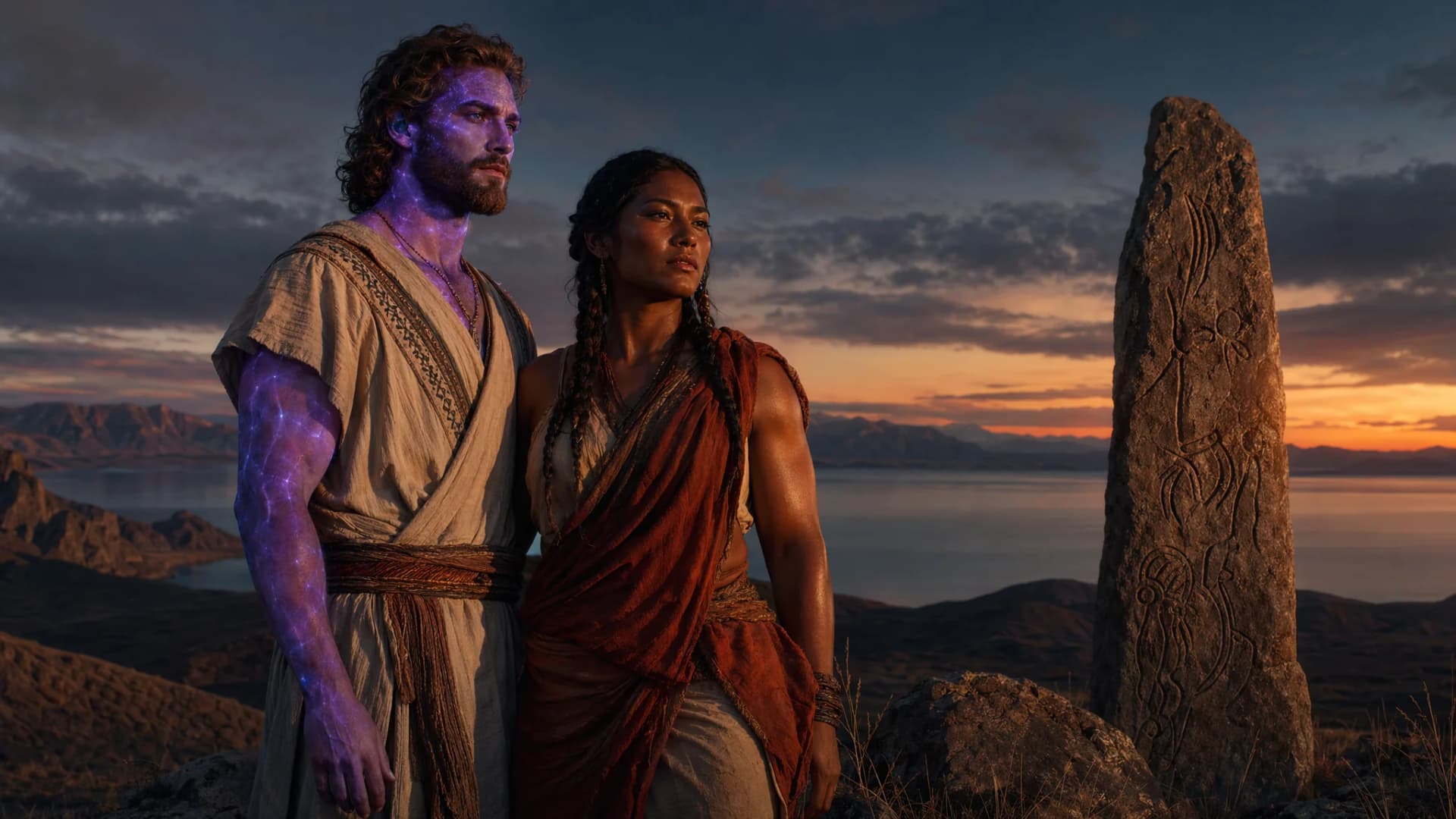
The Dark-Skinned Lord and His Beloved: Adamson, Ratta, and Krishna-Radha
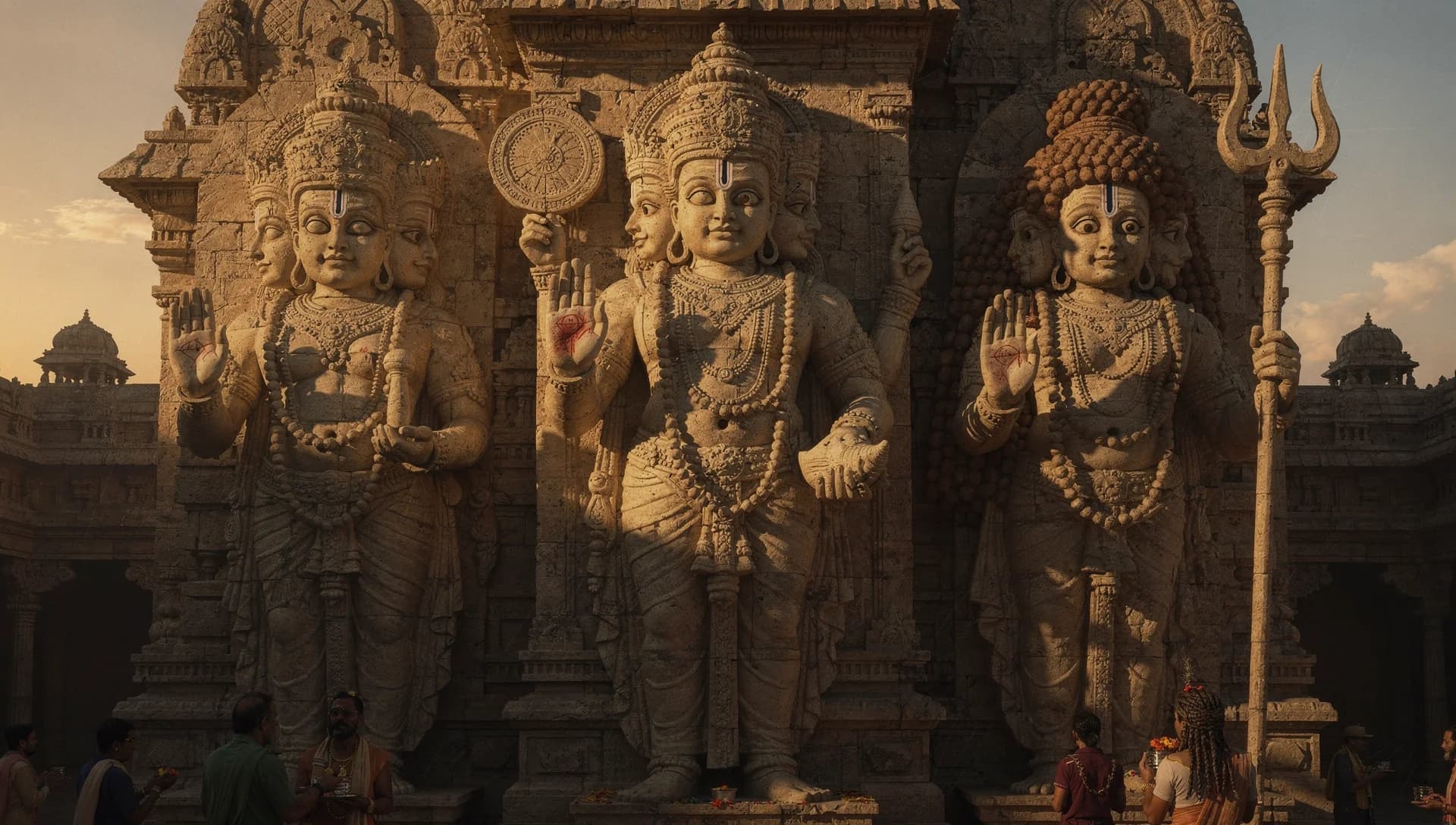
Three from One: The Salem Trinity Teaching and the Hindu Trimurti
The Thunderbird Was Real: Fandors and the Indigenous American Giant Bird Tradition
The Giant Bird That Carried Men: Pouakai, Te Hokioi, and the Fandor Memory in New Zealand
The Newsletter
Get the research behind each piece
Free. New Urantia Book explorations, the sources behind the videos, and early looks. No spam, unsubscribe anytime.
Prefer video? Follow on YouTube and Facebook.
Delivered through Substack. You can also read past issues.